
Most owners treat interior design as a cost to get through before the listing goes live. It’s actually the single largest lever on what a short-term rental earns. Here’s how it moves nightly rate, occupancy and reviews.
The cost that’s actually a lever
Most owners think of interior design as a cost, the line that sits between an empty property and a photographable one, something to get through before the listing goes live. Design is actually the single largest lever on what your short-term rental earns, and it works on every metric that matters: the nightly rate you can hold, how often your calendar fills, and the reviews that decide whether either lasts.
1.) The rate is set before a guest arrives
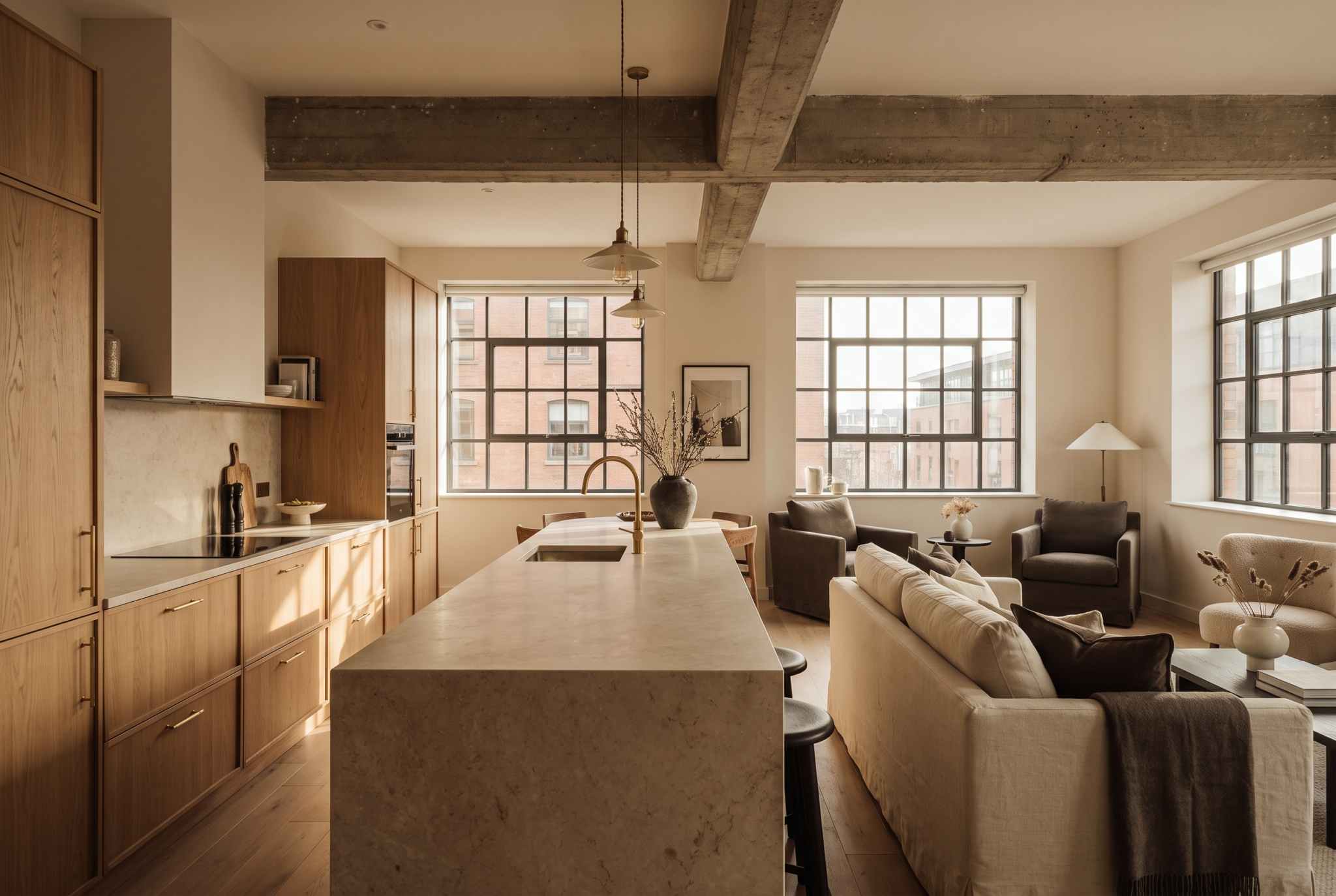
A guest books from a screen. They compare 20 listings in a category and decide in seconds which one justifies a higher price. That decision is made almost entirely on how a space reads in a photograph. A considered interior photographs with depth. Materials catch light, proportions feel resolved, and the eye moves through the rooms rather than skating over them. That’s not vanity. It’s the difference between a property positioned at the top of its comparison set and one competing on price alone. Design sets the ceiling on your rate long before anyone walks through the door.
“Design sets the ceiling on your rate long before anyone walks through the door.”
Corin Craig Jackson, Founder, Heim Studio
2.) Occupancy follows the same logic
A space that reads as intentional books more often, and it books further ahead. The listings that fill their calendars are rarely the cheapest. They’re the ones a guest looks at and trusts, because considered design signals a property that will be clean, functional and exactly as promised. Get the layout right and the effect compounds. Flow, light and a plan that suits how guests actually use a space reduce friction, and reduced friction shows up directly in occupancy.
3.) Reviews are where design pays back
The nightly rate opens the account. Reviews keep it open. A guest scores their stay on how the space felt and how well it worked, and both are design decisions: where the bed sits relative to the window, whether the kitchen functions for two people at once, how a room holds up after 200 stays rather than five. Every material should be specified for durability under high-frequency use, because a finish that looks resolved on handover and tired by month three costs you in reviews and replacement both. Design that lasts is design that keeps earning.
4.) Design as a system, not a surface
None of this is about spending more. It’s about spending in the right places. The right approach recommends the lightest intervention that reaches the standard your property needs to compete. Sometimes that’s a full renovation. Often, it’s a considered furnishing package, or a styling layer on a space that’s already strong. Assess what the asset has to achieve first, then specify against it: never a renovation you don’t need, never an under-specified space that won’t perform.
Every decision should pass a commercial test. If a choice doesn’t improve guest experience, nightly rate, occupancy or review quality, it doesn’t make the cut. Aesthetics always, but aesthetics in service of return.
The most powerful commercial instrument you own
A property that functions precisely and reads as considered is the most powerful commercial instrument you own. It’s set before a guest arrives, it compounds through occupancy, and it pays back in the reviews that keep both climbing. Design for that outcome, and you’re designing for return.
Treat design as the performance lever it is, and every metric that matters, rate, occupancy, reviews, moves because of decisions made before a guest ever arrives. The numbers rarely lie: design that performs shows up directly in occupancy, nightly rate, and the reviews that keep both climbing. That’s the return we design for on every Heim Studio project across Manchester city centre, treated as an investment case from the first sketch. Follow @heimstudiomcr or visit staging.heim-studio.co.uk for more, and if you want Heim Studio to design your space by becoming a HeimHost client, contact us today at hello@heimhost.co.uk or visit www.heimhost.co.uk.


